Arrest Warrants in Limestone County
An arrest warrant is a judge's order telling an officer to bring a named person into custody. Texas Code of Criminal Procedure Chapter 15 sets the path. A complainant files a complaint with sworn facts attached. A magistrate then reviews those facts for probable cause. The underlying charge is a separate court matter that plays out later. Limestone County publishes no countywide public arrest-warrant search. A felony file may sit with the 77th or 87th District Court and the District Clerk, while a misdemeanor or lower-court case follows another route. So ask which court issued the process before trusting any result. That one question saves the most time.
Limestone County Arrest Warrant Review
Chapter 15 walks through the whole life of a warrant: the complaint, the sworn affidavit, the magistrate's review, and what the document must contain. The judge or magistrate weighs the sworn statement and decides whether the legal standard is met. Service comes later. The record of that service usually stays with the law-enforcement office that received the order. Limestone County's sheriff posts no warrant unit page or assignment chart. City police and constables carry service roles too. For the legal case itself, ask the issuing court. For booking or service routing, ask the agency named in the court's instructions. Each office answers its own half of the question.
What a Limestone County Arrest Warrant Contains
Limestone County publishes no sample warrant, so no public document confirms a local layout or number format. When you call the issuing clerk or counsel, ask for these specifics. Sealed or investigative material may be closed to public inspection anyway.
| Reference | No public format verified Ask for the case or process number used by the issuing court. |
|---|---|
| Person identifier | Name and any descriptor needed to tell records apart; share only what the official office requests. |
| Charge / offense | The offense or complaint connected to the case; it is not a finding of guilt. |
| Issuing judge / court | The magistrate and court that control the warrant and underlying case. |
| Bond / release terms | Ask the court or magistrate. The county has no published universal bond schedule. |
| Issue / service / return | Ask what dates and service details are public and whether any record is sealed. |
Limestone County Arrest Warrant Fields Are Unverified
What Limestone County and its cities post publicly is case and payment information, not a warrant record with a documented set of fields. No local number pattern is published, so confirm identifiers with the clerk rather than guessing. Ask what identifier points to your case and whether the warrant itself can be inspected. A docket entry may show a court, a charge, a setting, or a disposition, yet still say nothing about a live service return. Bond is case-specific. A fine or process fee listed on a cost chart can never substitute for the amount the magistrate actually ordered.
How Arrest Warrants Are Served
Several offices share service duty in Limestone County. The sheriff, the four constable precincts, and municipal police can all serve court process within their own authority and assignments. No agency posts a public list matching warrants to specific officers. Anyone with a custody question can call the Sheriff's Office at 254-729-3278. The official site lists the jail division as operating 24/7. Jail hours are separate from clerk hours, though, and they set no warrant-surrender window or bond desk. Ask which agency placed a hold, which court issued the process, and what official steps follow. The court controls the order; a serving agency only reports execution or custody information.
Limestone County Service Roles Stay Distinct
Limestone County splits warrant work among several offices, and knowing who does what saves time. The county constable directory lists four precinct offices, while the sheriff's page lays out jail, bail-bond, civil-process, and court-security duties. City police pages work as contacts for city agencies. None of these pages will tell you which officer holds a particular warrant, though they can route a question. The clerk side matters just as much. For a felony court file, contact the District Clerk; for County Court misdemeanor records, contact the County Clerk. A city or JP case goes through the originating court. If an officer or jail reports a hold, ask for the issuing court and the case number so the order and next setting can be confirmed. The constable page maps the service layer; it is not a public warrant search.
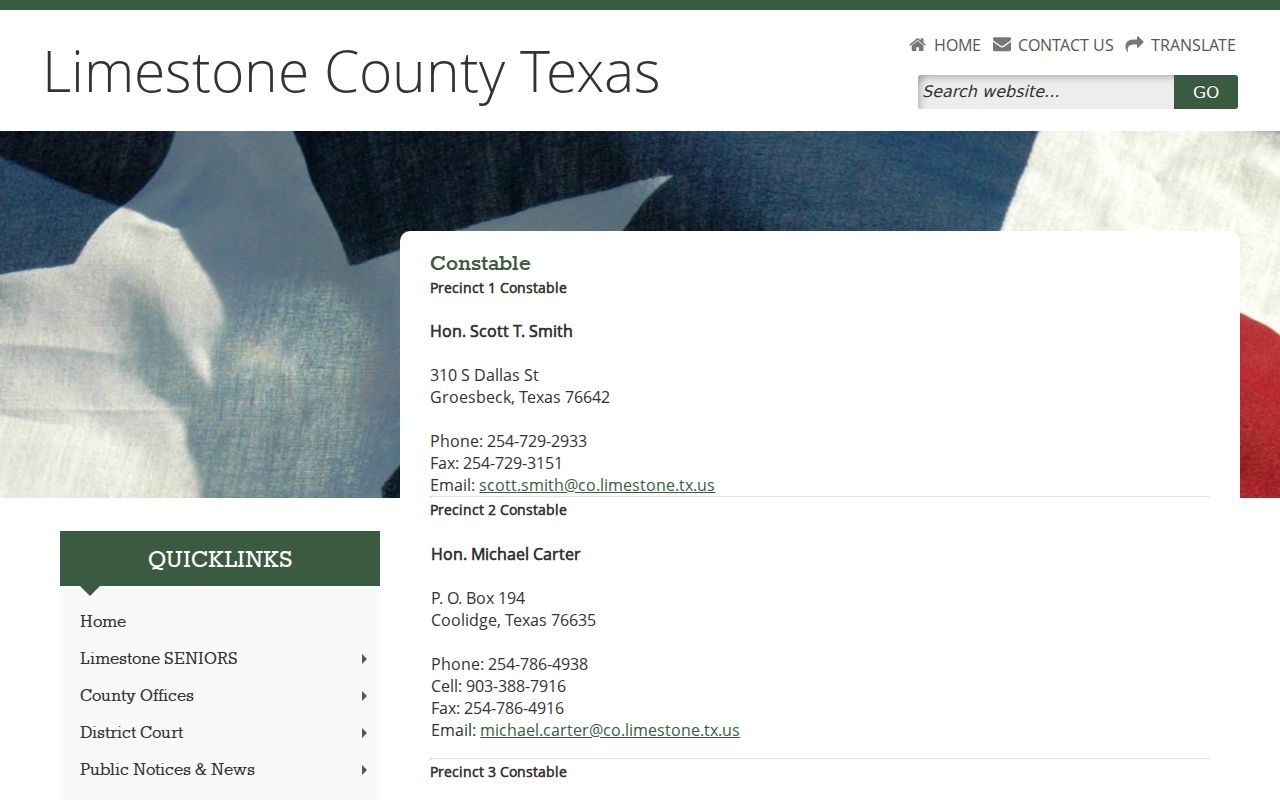
Use the current Limestone County listing to route service questions. Use the issuing court to confirm legal status.
Arrest Warrant vs Summons vs Bench Warrant
A summons tells a person to respond or appear, without the immediate custody order an arrest warrant carries. A bench warrant or capias usually follows a missed court obligation later. In every case, read the order itself. Then ask the issuing court in Limestone County how to respond.
| Feature | Arrest Warrant | Summons | Bench Warrant |
|---|---|---|---|
| What It Orders | Officer to arrest and bring the person before court. | Person to appear or respond as stated. | Arrest or appearance process after a court obligation. |
| Basis | Complaint and probable-cause review. | Charging and notice rules for the case. | Missed setting or noncompliance as determined by the court. |
| Who Issues It | Authorized judge or magistrate. | Court or authorized official under applicable procedure. | Judge of the court handling the matter. |
| How to Respond | Ask counsel and court about bond and appearance. | Follow the listed date and instructions. | Ask the issuing court about recall or setting. |
Limestone County Arrest Warrants and Summonses
A charging paper, a summons, a warrant, and a service return are four different records. The public might see a docket entry while the affidavit or warrant stays sealed or restricted. Received paperwork? Use its court and cause number. If you have nothing in hand, ask counsel or the likely issuing office how to make a private inquiry. Texas Code of Criminal Procedure Chapter 15 governs arrest-warrant requirements and service, but it creates no public name-search system for Limestone County. A search-warrant affidavit is different again. That document concerns evidence at a specified place or property, not a personal arrest-status lookup in Limestone County.
What to Do If There Is a Warrant for You
A warrant in Limestone County should start with two calls. Get a lawyer first. Then contact the issuing court. Ask it to confirm the case and spell out the bond and appearance terms, and ask how a recall or quash order would be put in writing. An attorney can often arrange a setting so you are not walking in blind. If the person is already in custody, the sheriff or jail can answer the hold question, though the court still controls the case itself. Keep your paper trail after any payment or appearance. Save the receipt and ask for a docket entry, a signed order, or written confirmation, and find out when the sheriff, constable, or city police will get notice. Limestone County publishes no countywide update timetable and no bond schedule, so the court is the only reliable source.
Important: A possible arrest warrant can lead to custody; speak with counsel and the issuing court about a safe appearance and bond plan.
Limestone County Federal Warrants Use Waco
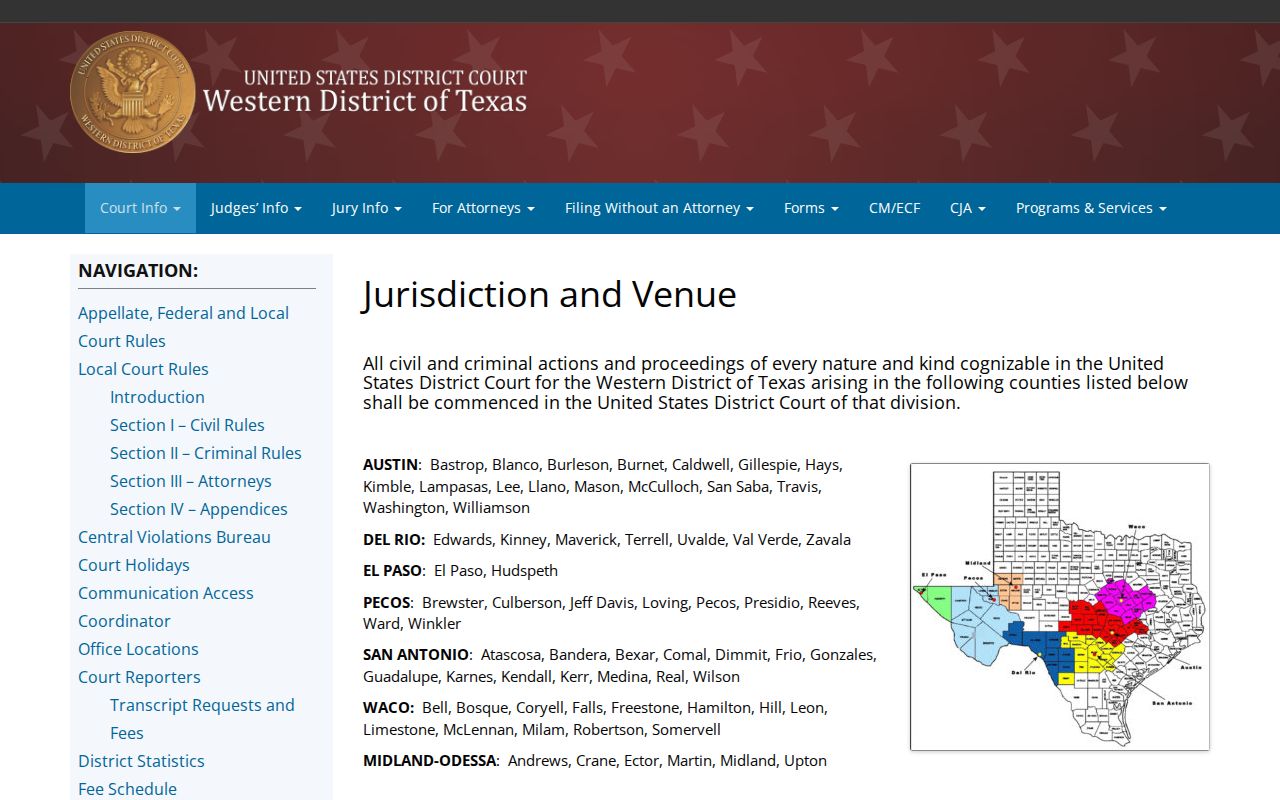
Federal process runs on a separate track. Limestone County sits in the Waco Division of the U.S. District Court for the Western District of Texas, so a federal warrant question points to Waco, not to the courthouse down the road. The federal clerk, PACER/CM-ECF, and the U.S. Marshals Service handle federal docket and service questions. The Limestone County Clerk and municipal payment portals cannot clear federal process. Two cautions apply. PACER may not display sealed process. A docket entry is not necessarily a warrant image. Confirm the right route with federal counsel, the clerk, or USMS. The federal court's venue page identifies the Waco Division for the region, and any local arrest or hold question still belongs with the agency holding the person.
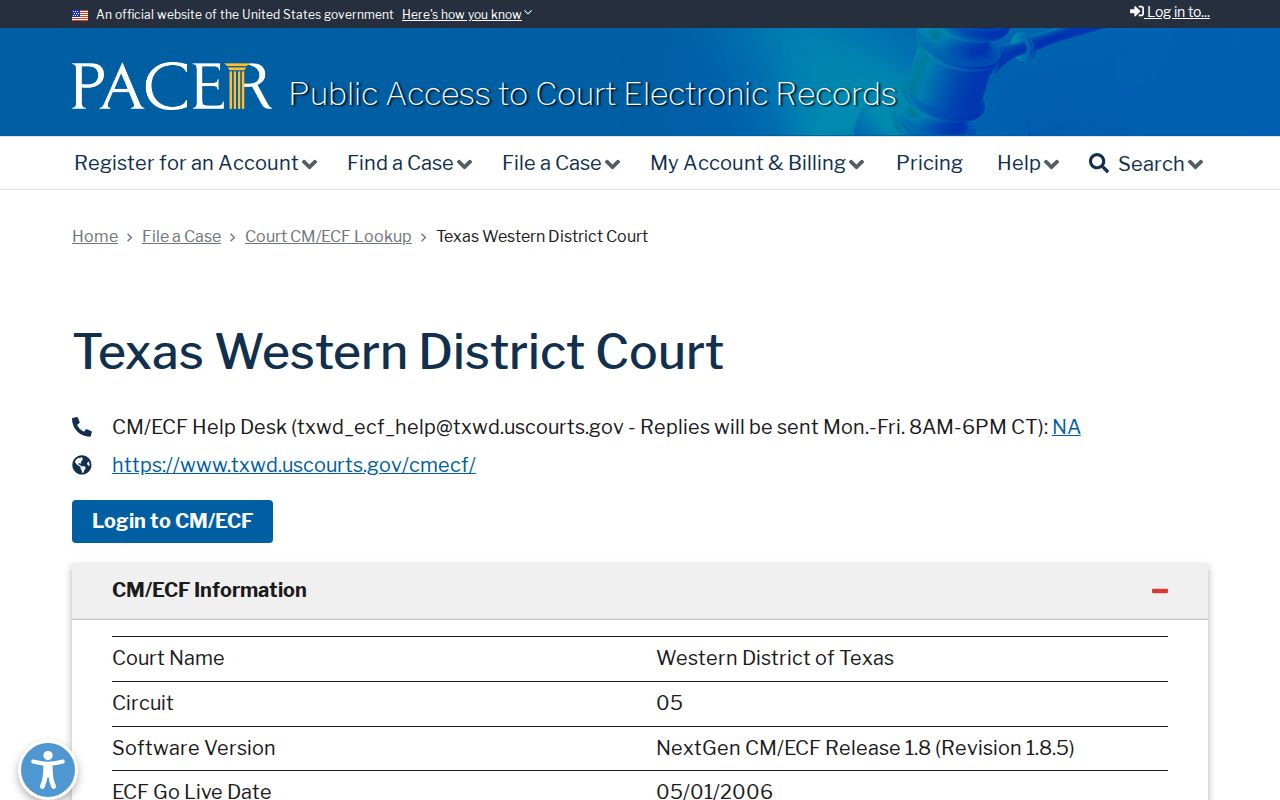
Federal case access uses PACER's separate court-selection route.
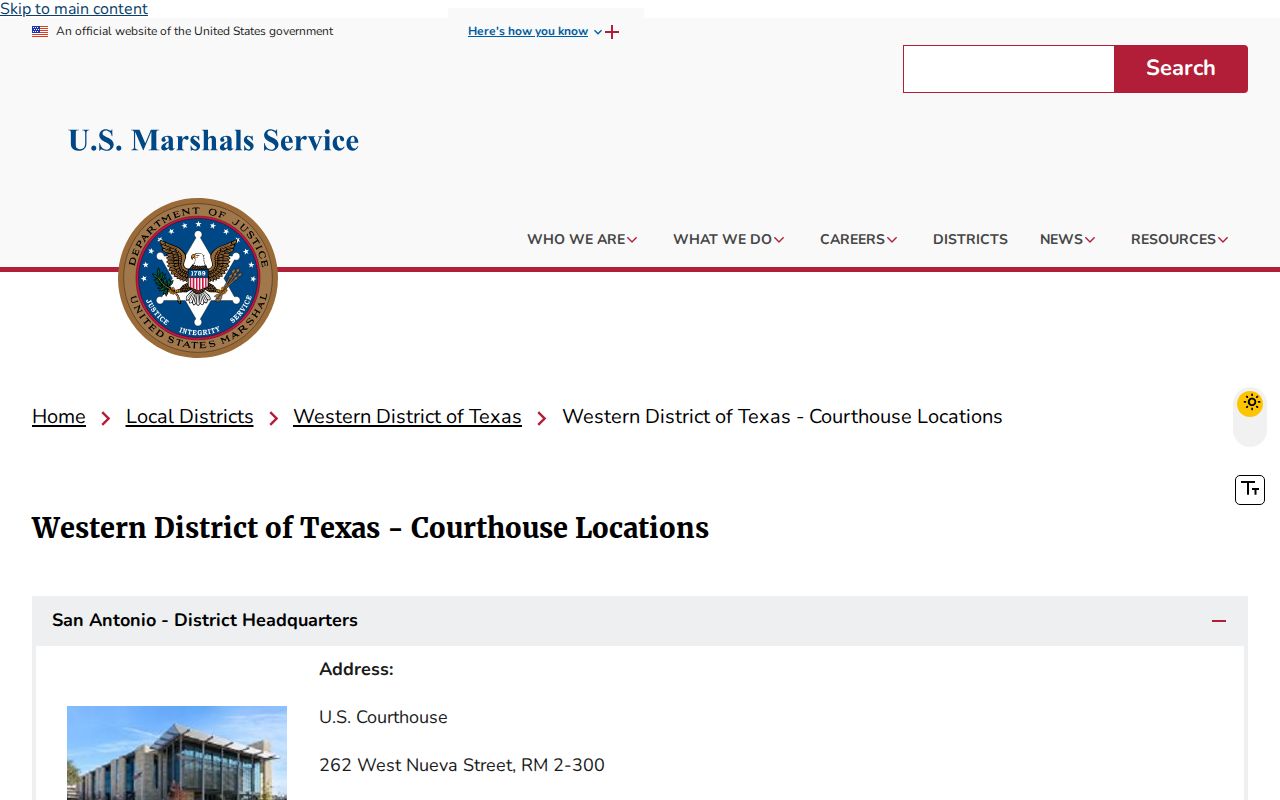
The U.S. Marshals Service provides district contact information for federal custody or service inquiries.