
How to Search for a Warrant in Limestone County
There is no single Limestone County public form that searches district, county, JP, and municipal warrants together. The best search is a short set of private inquiries to the offices that keep the case. Begin with the court on the citation or paperwork. A city matter may not appear in a county clerk payment portal, and an arrest process may not appear in a court's public docket.
Have the name, date of birth, case or citation number, city, and likely precinct ready, but share only what the clerk asks for. No local office publishes a universal search-field list or guarantees phone disclosure. Ask whether it can confirm the current process, which court issued it, and how to resolve or verify a change.
- For a felony, ask the District Clerk about the district case and the assigned 77th or 87th District Court. For a county misdemeanor, ask the County Clerk.
- For traffic or Class C process, call the JP precinct printed on the citation. City tickets go to the named municipal court.
- Call the Sheriff's Office at (254) 729-3278 for service, booking, or agency routing. It is not a published dedicated warrant line.
- If no public listing exists, ask the actual office how to submit a narrow Texas Public Information Act request for your own record.
- Use DPS only for an FTA/FTP license-renewal issue, then ask the court about the warrant itself and consult counsel as needed.
Limestone County Warrant Search Has No Roster
The reviewed county and sheriff sites publish contacts and office roles, but no searchable public warrant roster. The county sheriff page links to the Sheriff's Office; its general-information page describes the jail and administrative hours. Neither page exposes a warrant search form or a dedicated warrant-unit phone number.
That finding is dated September 20, 2026. It should be rechecked before relying on it. The absence of a list cannot establish that a person's process does not exist. Ask the sheriff to route a service question, then verify the legal status with the issuing clerk or court.
Limestone County Warrant Search Fields
No county sheriff search form was available to inspect, so there are no published required fields, filters, or match rules. The chart records that limitation instead of guessing what a portal asks. A clerk may request a case number or a few identity details to distinguish common names. Ask before sending private data.
| Field Label | Type | Required | Notes |
|---|---|---|---|
| Last or first name | Not exposed | Not published | Ask the clerk what identifiers it needs. |
| Date of birth | Not exposed | Not published | Useful for private disambiguation; no public field is documented. |
| Warrant number | Not exposed | Not published | No Limestone public format was verified. |
| Cause or case number | Payment search reference | Unspecified | County Clerk describes name or case-number search for its payment service. |
| Court / jurisdiction | Not exposed | Not published | Countywide court filters were not found. |
Limestone County Warrant Matching Limits
Because no public index is exposed, there is no verified local rule for partial names, aliases, date-of-birth matching, or how recently a court action appears. Do not assume an empty result means the name was searched across every court. A case may be held at the city or JP level, or it may be restricted from public release.
For a common name, ask whether the office can search its own case records using a cause number, citation date, or court name. Do not send a Social Security number or a full identity document unless the official custodian explains why it is needed and how to submit it securely.
What a Warrant Search Returns
No public Limestone warrant sample was found to verify a standard result screen. The fields below are items to ask about, not a promise that every clerk or agency publishes them. Start with the court and cause number, then ask whether the status is current in the issuing court's system.
| Reference | No public format verified Request the court's own cause or process number. |
|---|---|
| Charge / court duty | Ask what case or missed obligation is connected to the process. |
| Issuing court | Identify the JP, municipal, county, or district court that controls the case. |
| Bond or judgment | Ask the court or magistrate. A fine and bond are not the same amount. |
| Status / service | Ask whether process is active, served, recalled, or quashed and when the entry changed. |
Limestone County Warrant Payments Need Review
A payment page is not necessarily a status search. The County Clerk's criminal-payment instructions mention lookup by name or case number, while the JP3 vendor says it handles JP3 criminal and traffic fines. Kosse's selector separates ticket payment from a deferred-disposition request. Those scopes do not establish that an arrest warrant was recalled.
Before paying, confirm the domain from the official court or county page, ask which case the transaction covers, and save the receipt. Then ask the issuing court whether it posted the payment and what written order or docket entry confirms a recall.
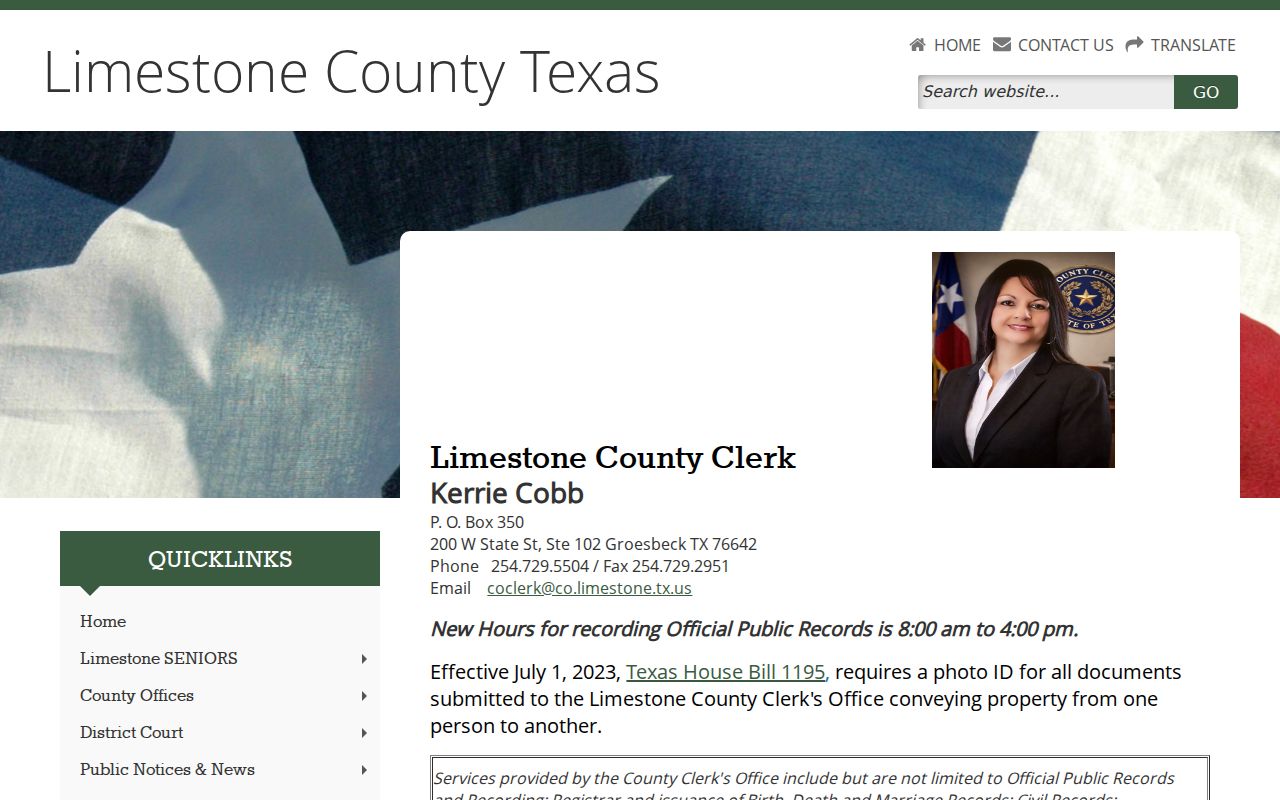
The County Clerk page shows the official records and payment route. It identifies a case-related service, not a countywide warrant list.
The clerk's payment instructions are a separate official source for its transaction route.
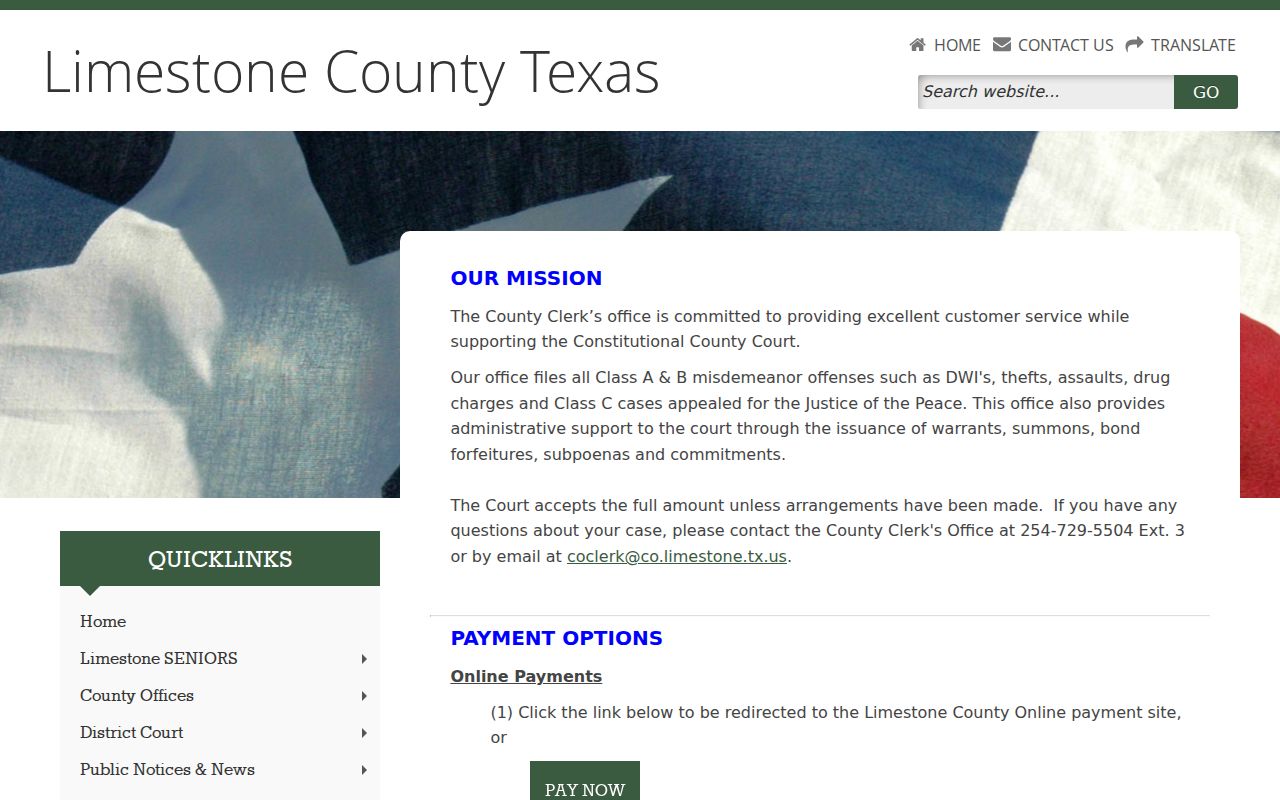
Confirm that the service applies to the case and question at hand.
The County Clerk's vendor portal may display a payment lookup, not a countywide warrant roster.
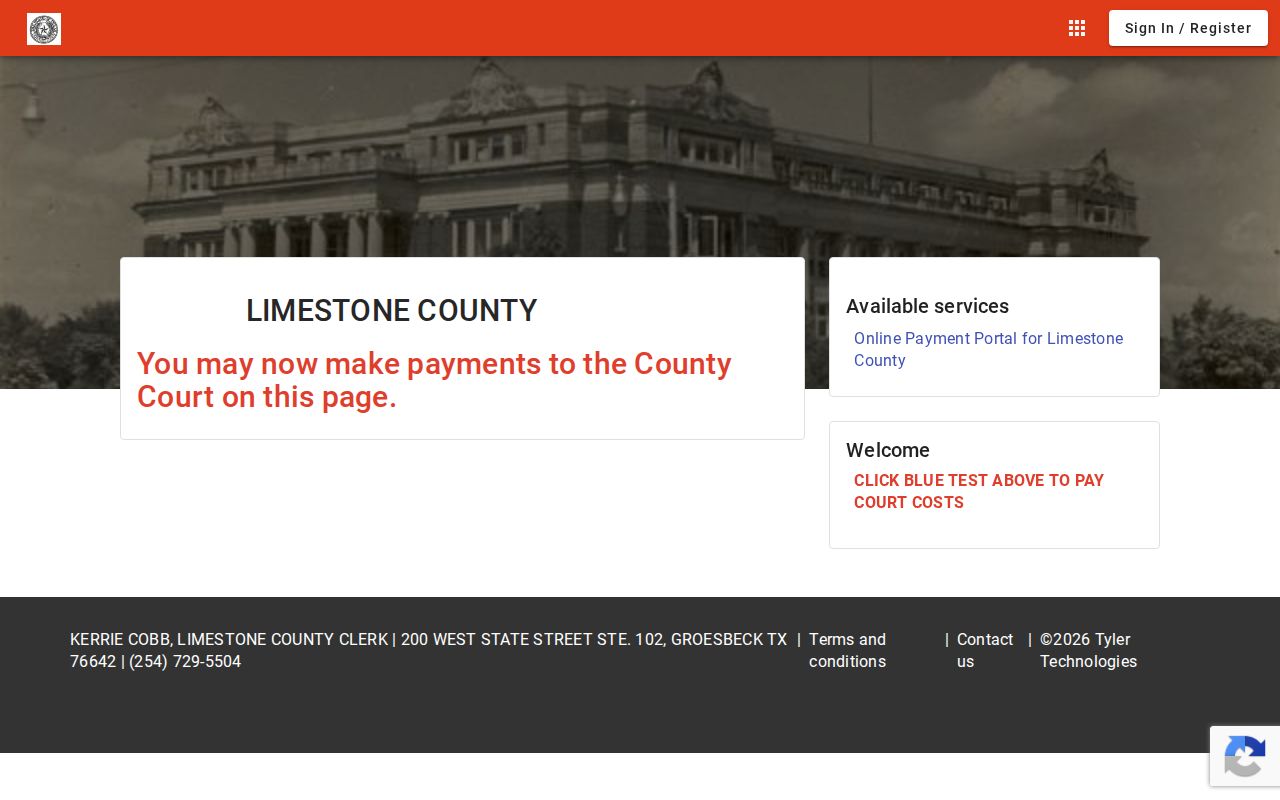
Use the court's own contact to verify whether a transaction changes process status.
Where Limestone County Warrants Are Checked
The District Clerk is the felony-file route; the County Clerk handles County Court misdemeanor records and related process. JP1 through JP4 keep their own traffic and fine-only files. Groesbeck, Mexia, Coolidge, Kosse, and Thornton municipal courts keep city cases. The sheriff can answer custody and service-routing questions but does not replace those case custodians.
Texas has no single public statewide arrest-warrant search identified in this research. DPS's FTA/FTP program addresses qualifying citation reports that can affect license renewal. The issuing city or county court must answer the underlying case question, and DPS license specialists say they do not have warrant information.
The District Clerk's official page identifies its felony-record contact route.
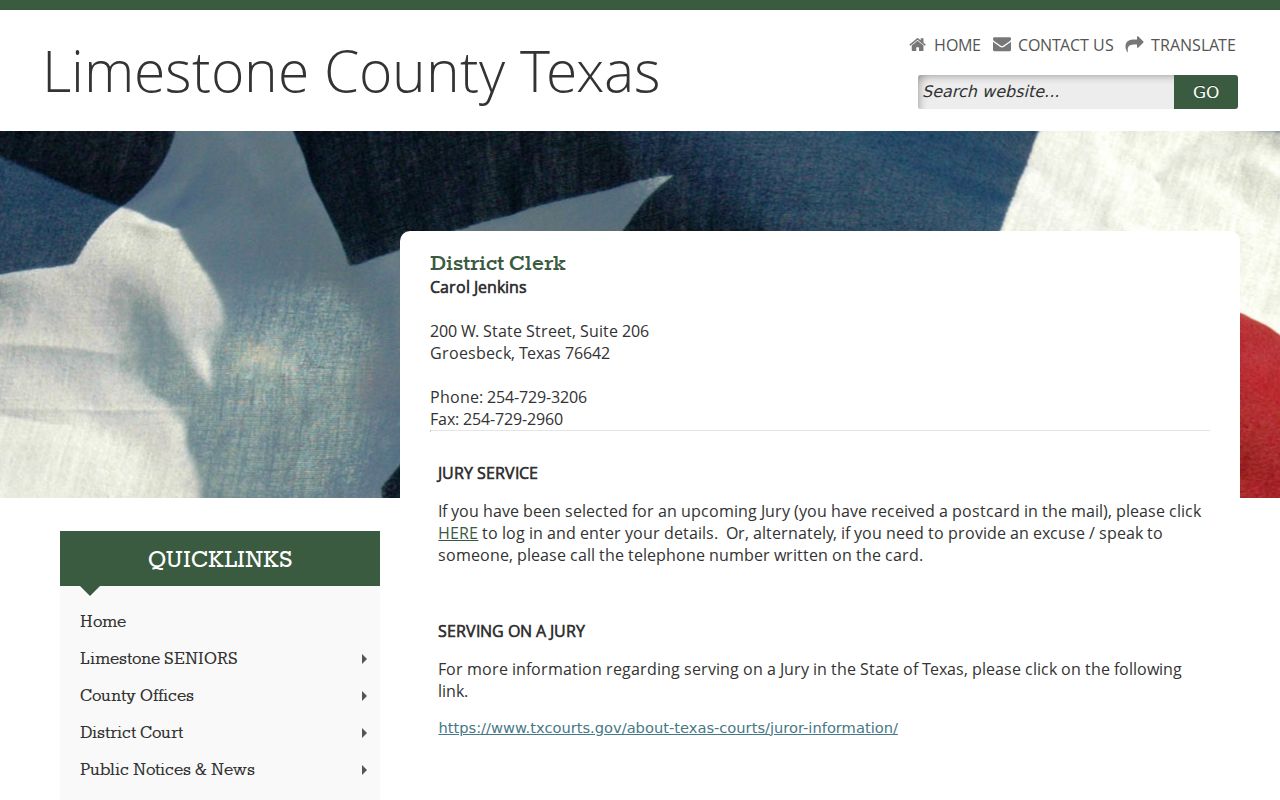
Use that office for district-court files, not JP or city citations.
Limestone County Warrant Channels Stay Separate
A complete self-check may require more than one office. A city traffic citation usually goes to the city court named on the ticket; a state-law citation may go to a JP precinct. Felony records route through the District Clerk, and county misdemeanors through the County Clerk. If the type is unclear, use the citation and ask the listed agency which court received it.
The sheriff's jail division is listed as 24/7, but its administrative and court services follow separate hours. The county does not publish an open warrant window or guaranteed phone-answer policy. Call first before traveling, especially for a surrender or bond question.
Access and Restricted Warrants
Public-record access has limits. A Texas Public Information Act request asks for existing records; it does not make an office create a countywide warrant roster. A court or law-enforcement office may withhold sealed process, juvenile warrant information, or material whose release could interfere with an investigation. The custodian decides what can be disclosed.
Key Rules:
Sealed or investigative records may be withheld or redacted under applicable law.
Texas Family Code §58.010 protects juvenile arrest-warrant information.
No public result cannot prove that no process exists. Confirm status with the issuing court.
Limestone County Warrant Results Need Confirmation
Terms such as active, outstanding, served, recalled, and cleared can describe different points in a court or service record. Ask who entered the label and whether it is current in the issuing court's system. A sheriff may know service or custody information while the court controls its own recall order.
If an office cannot discuss a record by phone, ask what verification or authorization is required. For a relative's case, disclosure may be limited. A public-information request may also be narrowed or redacted. Keep identifiers private and do not treat a search snippet, payment receipt, or DPS screen as the final court answer.